

















































Speaker Types Explained: Subwoofer vs Midrange vs Tweeter vs Full-Range

Imagine cruising your UTV down a rough trail, with gravel kicking up, the engine roaring, and wind rushing past your helmet. Even when you turn your music all the way up, you may still miss the clear, powerful sound you want. The problem is not always the volume. It often comes down to the UTV speakers you are using and how well they handle different parts of the sound. Without the right mix of different types of speakers, bass, vocals, and high-frequency details can blend together, leaving your music sounding muddy or distorted.
The sound spectrum is made up of a complex array of vibrations. It hardly ever happens that a "one size fits all" solution reproduces the sound spectrum correctly, especially when the place is as harsh as outdoors. If you are planning to create a top-notch speak system for your UTV, you have to get into the details of speaker comparison, especially the roles of tweeters, midranges, subwoofers, and full-range speakers.
What Are UTV Speakers and How Do They Work?
A UTV speaker is basically a device that converts electrical signals into sound waves (vibrations that your ears interpret as sounds such as music, speech, or noise in the environment), and compared to regular speakers, it has stronger resistance to environmental interference, meaning it performs better in noisy settings. Additionally, it is waterproof and dustproof, capable of handling the complex driving conditions of side-by-side.
The human ear is capable of hearing sounds that range from low bass notes at 20 hertz (Hz) to great treble details at 20,000 Hz (20kHz). To produce such an extensive range of sounds, the different components of an audio system are each responsible for a certain segment of the sound spectrum. Different types of speakers come in handy here.
4 Types of Speakers Used in UTV Audio Systems
1. The Bass Powerhouse: Subwoofer
A subwoofer is a kind of speaker that is used to reproduce the lowest audio frequency sounds. The typical range that is played by the subwoofer is around 20-200 Hz. The main aim of the subwoofer is to produce deep bass sounds that can be experienced by hearing and touch. While other speakers are made to produce midrange and treble sounds, the subwoofer is utilized to produce low sounds. That is why the subwoofer is used for music, which is basically based on powerful bass. The subwoofer is also a necessity in a UTV audio system to ensure that the engine noise doesn't overpower the low music sounds.
★ How Subwoofers Work
A subwoofer is generally bigger than other speakers. The main reason for the subwoofer being bigger is that it plays lower sounds, which require the speaker to move more air. The subwoofer is generally put in a cabinet to make sure that it produces the best quality of low sounds. The subwoofer is generally connected to an amplifier so that it can produce loud enough sounds.

2. What Is a Midrange Speaker
The midrange speaker is designed to reproduce the middle frequency band of the audio spectrum, where most of the music is.
The midrange frequency band is usually considered to be between 200 and 5,000 Hz, but this can differ a bit in some designs. Because this band covers the range of frequencies that our ears are most familiar with, the midrange speaker is crucial for creating natural-sounding audio.
★ The Role of Midrange in Audio
The function of a midrange in a speaker setup is to reproduce the main part of the music, i.e., the part with vocals and lead instruments, the one that contains most of the harmonies. It is the most crucial portion of the music, and that's the reason why even the best audio system in the world won't sound good if there is a lack of midrange.
The traditional multi-speaker system features the midrange driver working in conjunction with other drivers to provide a smooth transition of frequencies. In the case of a UTV speaker system, the midrange driver works in a 2-way or 3-way configuration with tweeters and woofers.
3. High-Frequency Detail: Tweeter
A tweeter is a kind of gadget specifically made to emit very high-frequency sounds, usually in the range of 5kHz to 20kHz, which correspond to the upper part of the human hearable spectrum. These are the types of sounds of cymbals, high hats, vocals, and the glittering tones that add life to music.
Since high-frequency sound requires rapid movement, tweeters have very small diaphragms, usually made of silk, fabric, or metal, that are quick and produce little distortion.
★ Why Tweeters Matter
Tweeters are important because without them, your sound will lack clarity and will sound flat. High-frequency sound gives clarity and dimensionality to music, making instruments sound clean and vocals sound realistic. Tweeters also make sure that high-frequency sounds don’t get lost under louder mid-range and bass sounds.
In a rough ride like a UTV, tweeters will give you clarity of sound through all the engine and wind noise, so you don’t lose the high frequencies in the background din.
4. All-In-One Speaker Solution: Full-Range
A full-range speaker is one that is designed to perform over the entire range of human hearing, which is 20Hz to 20kHz. It is essentially a speaker that is designed to perform all functions. It is engineered to perform over the entire range of frequencies.
In other words, full-range speakers are essentially those that try to do it all. However, they are also essentially compromised. While they might perform well enough in a small system, they will rarely have the kind of depth, clarity, and accuracy that is possible with a multi-speaker system that has separate drivers for the low end, midrange, and high end.
★ When Full-Range Works Best
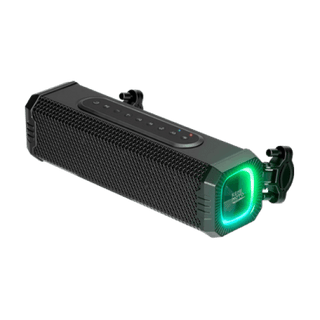
Full-range speakers are best used when space is an issue, as is cost. They are also best used when the system is simple. This is why they are commonly used in portable Bluetooth speakers. Full-range speakers are also best used when rugged durability is an issue. For example, there are many UTV speakers that are currently on the market that are full-range.
UTV Speaker Comparison: Tweeters, Midrange, Subwoofers, and Full-Range Speakers
|
Feature |
Tweeter |
Midrange |
Subwoofer |
Full-Range |
|
Strength |
Crisp high frequencies |
Clarity and musical detail |
Deep bass, impact |
Simplified all-in-one |
|
Purpose |
Clarity & Detail |
Vocals & Instruments |
Bass & Impact |
Convenience & Balance |
|
Frequency |
High (5kHz - 20kHz) |
Mid (200Hz - 5kHz) |
Low (20Hz - 200Hz) |
Broad (20Hz - 20kHz) |
|
Size |
Small |
Medium |
Large |
Variable |
The biggest difference between these speaker types is the part of the sound they are built to handle. A subwoofer brings out the low-end bass, while a tweeter keeps higher notes clear and sharp. A midrange speaker sits between the two, covering much of the vocal and instrument detail you hear in everyday music. This is why people comparing midrange vs full range speakers may notice a clear difference in how each one is used.
A midrange speaker focuses mainly on the middle frequencies, while a full-range speaker tries to cover a much broader range on its own. In a full range vs mid range speakers comparison, full-range designs are usually simpler and take up less space, while midrange drivers work best as part of a multi-speaker setup. For a UTV, the right choice depends on how much space you have and how much sound detail you want to hear over engine, wind, and trail noise.
Choosing Between Full-Range and Multi-Way Speaker Bar for UTV
✔ When Full-Range Speaker Works Best
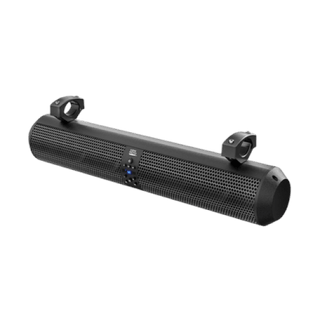
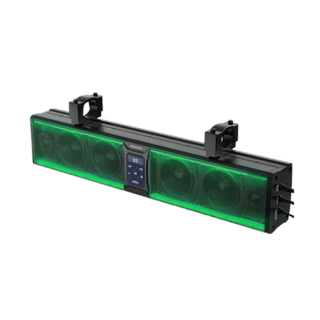
Full-range speakers (like Kemimoto 3-Speaker UTV Audio Kit, 2 full-range speakers + 1 woofer) are ideal for systems where space, cost, or simplicity matter — such as portable Bluetooth speakers, small stereo units, or basic UTV setups. They can be a great choice when rugged durability and balanced sound are priorities, without the complexity of installing multiple speaker types.

✔ When Multi-Way Speaker Works Best
If you have ample space in your UTV or other vehicles, and you chase the best sound experience, the multi-way speaker will be the NO.1 solution for your car sound system. This speaker is combined with 2 or 3 (even more) types of speakers.
★ 2-Way Speakers
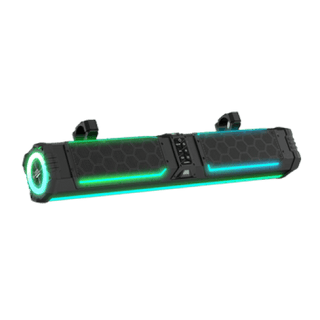
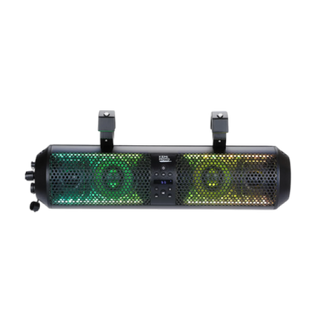
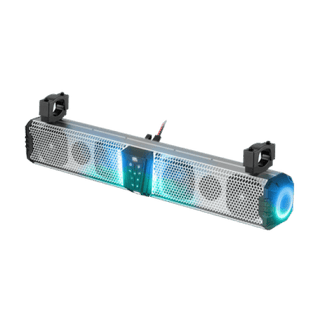
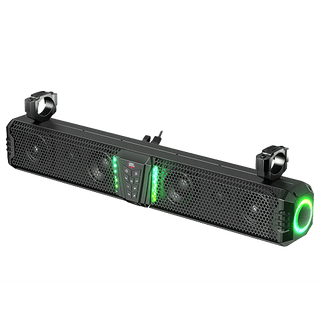
A 2-way speaker contains two main drivers: woofer (low + some mid frequencies) + tweeter (high frequencies). (e.g, Kemimoto 6 Speaker UTV Bluetooth Sound Bar, 4 subwoofers + 2 tweeters)
The built-in crossover splits the signal such that the tweeter only gets the high frequencies while the woofer components cover the rest. Such a layout is very common with speakers for general consumers as it offers a pretty good compromise between the size, price, and quality of the sound. However, midrange frequencies can be a little bit less clear because the woofer is required to handle a broader spectrum.
★ 3-Way Speakers
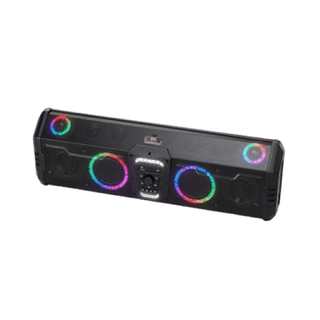
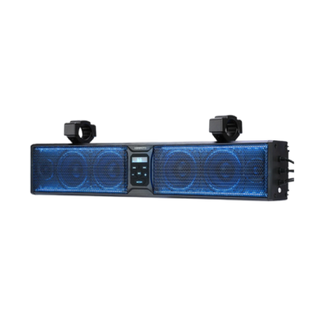
The 3-way speaker is normally composed of: subwoofer/woofer for the low frequencies, midrange driver for the vocals and instrumentals, and tweeter for the high frequencies. (e.g, Kemimoto Midnight 90 Roof 34.25" Soundbar, 2 woofers + 4 midranges + 2 tweeters)

This separation allows each driver to focus on a narrower band of frequencies, improving clarity and overall sound performance. You generally get a more precise sound and a more balanced speaker comparison between lows, mids, and highs.
2-Way vs 3-Way Speakers
|
Feature |
2-Way Speaker |
3-Way Speaker |
|
Number of Drivers |
2 |
3 |
|
Frequency Separation |
Broad |
Narrower + more focused |
|
Clarity & Detail |
Good |
Better |
|
Complexity |
Simpler |
More complex |
|
Cost |
Often lower |
Often higher |
The main difference in 2-way vs 3-way speakers is how the sound frequencies are divided. A 2-way setup keeps things simple by splitting the sound between two types of drivers, while a 3-way setup separates the lows, mids, and highs more precisely. In a speaker comparison, 2-way speakers are often simpler and more affordable, while 3-way speakers can provide clearer detail across a wider range of sound.
UTV Speaker Installation: Getting Your Setup Trail-Ready
A good UTV speaker installation starts with fitment. Before mounting anything, check the speaker's recommended roll-cage size and choose a spot that keeps the UTV speakers secure without blocking your view or getting in the way of passengers. Kemimoto sound bars use different mounting ranges depending on the model, so measuring your roll cage first can save you a lot of trouble later.
Once the position is set, attach the supplied brackets and tighten the hardware evenly. Then connect the power according to your speaker model. Some UTV sound bar setups can plug into a 12V vehicle outlet, while others may be hardwired to the battery with the proper fuse and wiring. Keep cables away from hot, sharp, or moving parts.
Before hitting the trail, turn on the UTV audio system, connect Bluetooth if available, and test the sound at a low volume. Give the mounts and wiring one last check, and your setup is ready to ride.
Conclusion
Understanding the different types of UTV speakers is the key to moving beyond "standard" audio and into a world of high-fidelity sound. Whether you are performing a speaker comparison for your living room or upgrading your off-road rig, remember that balance is everything.
Ready to upgrade your ride? Explore the Kemimoto UTV Speaker Collection and find the perfect match for your vehicle today.


Leave a comment