





















































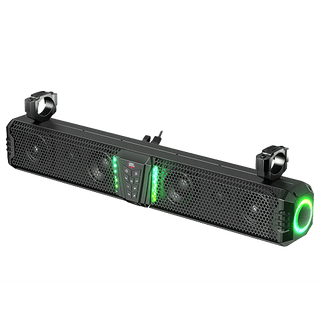





Tipos de altavoces explicados: Subwoofer vs. rango medio vs. tweeter vs. rango completo

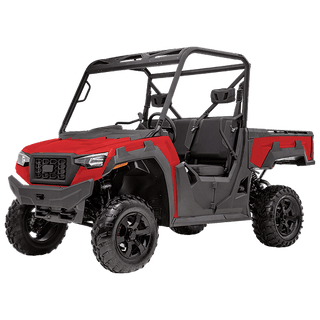
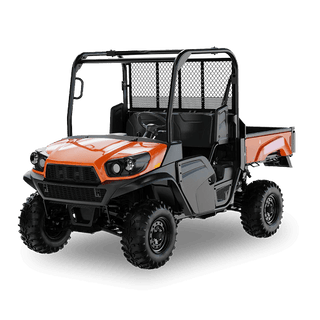
Imagínese conduciendo su UTV por un sendero accidentado, con la grava saltando, el motor rugiendo y el viento golpeando su casco. Incluso cuando sube el volumen de su música al máximo, es posible que siga sin obtener el sonido claro y potente que desea. El problema no siempre es el volumen. A menudo depende de los altavoces para UTV que esté utilizando y de cómo gestionan las diferentes partes del sonido. Sin la combinación adecuada de los diferentes tipos de altavoces, los graves, las voces y los detalles de alta frecuencia pueden mezclarse, haciendo que su música suene turbia o distorsionada.
El espectro sonoro está formado por una compleja serie de vibraciones. Es muy raro que una solución "talla única" reproduzca el espectro sonoro correctamente, especialmente cuando el entorno es tan duro como el aire libre. Si tiene previsto crear un sistema de altavoces de primera categoría para su UTV, debe entrar en los detalles de la comparación de altavoces, especialmente en las funciones de los tweeters, altavoces de medios, subwoofers y altavoces de rango completo.
¿Qué son los altavoces para UTV y cómo funcionan?
Un altavoz para UTV es básicamente un dispositivo que convierte las señales eléctricas en ondas sonoras (vibraciones que sus oídos interpretan como sonidos, ya sea música, voz o ruido ambiental) y, en comparación con los altavoces convencionales, tiene una mayor resistencia a las interferencias ambientales, lo que significa que funciona mejor en entornos ruidosos. Además, es resistente al agua y al polvo, capaz de soportar las complejas condiciones de conducción de los vehículos side-by-side.
El oído humano es capaz de escuchar sonidos que van desde notas graves bajas a 20 hercios (Hz) hasta grandes detalles de agudos a 20.000 Hz (20 kHz). Para producir una gama de sonidos tan extensa, cada uno de los componentes de un sistema de audio es responsable de un segmento determinado del espectro sonoro. Aquí es donde resultan útiles los diferentes tipos de altavoces.
4 tipos de altavoces utilizados en sistemas de audio para UTV
1. La potencia de los graves: Subwoofer
Un subwoofer es un tipo de altavoz que se utiliza para reproducir los sonidos de baja frecuencia. El rango típico que reproduce el subwoofer es de alrededor de 20-200 Hz. El objetivo principal del subwoofer es producir sonidos graves profundos que se pueden experimentar mediante el oído y el tacto. Mientras que otros altavoces están hechos para producir sonidos de rango medio y agudos, el subwoofer se utiliza para producir sonidos graves. Es por eso que el subwoofer se utiliza para la música, que básicamente se basa en graves potentes. El subwoofer también es una necesidad en un sistema de audio para UTV para garantizar que el ruido del motor no opaque los sonidos graves de la música.
★ Cómo funcionan los subwoofers
Un subwoofer suele ser más grande que otros altavoces. La razón principal por la que el subwoofer es más grande es que reproduce sonidos más graves, lo que requiere que el altavoz mueva más aire. El subwoofer generalmente se coloca en una caja para asegurar que produzca la mejor calidad de sonidos graves. El subwoofer suele estar conectado a un amplificador para poder producir sonidos lo suficientemente fuertes.

2. ¿Qué es un altavoz de medios?
El altavoz de medios está diseñado para reproducir la banda de frecuencia media del espectro de audio, donde se encuentra la mayor parte de la música.
La banda de frecuencia media suele considerarse entre 200 y 5.000 Hz, aunque esto puede variar un poco en algunos diseños. Debido a que esta banda cubre el rango de frecuencias con las que nuestros oídos están más familiarizados, el altavoz de medios es crucial para crear un audio que suene natural.
★ El papel de los medios en el audio
La función de un altavoz de medios en una configuración de altavoces es reproducir la parte principal de la música, es decir, la parte con las voces y los instrumentos principales, aquella que contiene la mayoría de las armonías. Es la parte más crucial de la música, y esa es la razón por la que incluso el mejor sistema de audio del mundo no sonará bien si falta el rango medio.
El sistema tradicional de varios altavoces cuenta con el controlador de medios trabajando junto con otros controladores para proporcionar una transición suave de las frecuencias. En el caso de un sistema de altavoces para UTV, el controlador de medios funciona en una configuración de 2 o 3 vías con tweeters y woofers.
3. Detalle de alta frecuencia: Tweeter
Un tweeter es un tipo de dispositivo diseñado específicamente para emitir sonidos de muy alta frecuencia, generalmente en el rango de 5 kHz a 20 kHz, que corresponden a la parte superior del espectro audible humano. Estos son los tipos de sonidos de platillos, hi-hats, voces y los tonos brillantes que dan vida a la música.
Dado que el sonido de alta frecuencia requiere un movimiento rápido, los tweeters tienen diafragmas muy pequeños, generalmente hechos de seda, tela o metal, que son rápidos y producen poca distorsión.
★ Por qué son importantes los tweeters
Los tweeters son importantes porque, sin ellos, el sonido carecerá de claridad y sonará plano. El sonido de alta frecuencia da claridad y dimensionalidad a la música, haciendo que los instrumentos suenen limpios y las voces suenen realistas. Los tweeters también aseguran que los sonidos de alta frecuencia no se pierdan bajo sonidos de rango medio y graves más fuertes.
En un paseo accidentado como en un UTV, los tweeters le darán claridad de sonido por encima del ruido del motor y del viento, para que no pierda las altas frecuencias en el ruido de fondo.
4. Solución de altavoz todo en uno: Rango completo
Un altavoz de rango completo es aquel que está diseñado para funcionar en todo el rango del oído humano, que es de 20 Hz a 20 kHz. Es esencialmente un altavoz que está diseñado para realizar todas las funciones. Está diseñado para funcionar en todo el rango de frecuencias.
En otras palabras, los altavoces de rango completo son esencialmente aquellos que intentan hacerlo todo. Sin embargo, también están esencialmente comprometidos. Aunque pueden funcionar bastante bien en un sistema pequeño, rara vez tendrán el tipo de profundidad, claridad y precisión que es posible con un sistema de varios altavoces que tiene controladores separados para los graves, los medios y los agudos.
★ Cuándo funciona mejor el rango completo
Los altavoces de rango completo se utilizan mejor cuando el espacio es un problema, al igual que el costo. También se utilizan mejor cuando el sistema es simple. Esta es la razón por la que se usan comúnmente en altavoces Bluetooth portátiles. Los altavoces de rango completo también se utilizan mejor cuando la durabilidad robusta es un problema. Por ejemplo, hay muchos altavoces para UTV que actualmente están en el mercado que son de rango completo.
Comparación de altavoces para UTV: Tweeters, medios, subwoofers y altavoces de rango completo
|
Característica |
Tweeter |
Medios |
Subwoofer |
Rango completo |
|
Fortaleza |
Altas frecuencias nítidas |
Claridad y detalle musical |
Graves profundos, impacto |
Todo en uno simplificado |
|
Propósito |
Claridad y detalle |
Voces e instrumentos |
Graves e impacto |
Conveniencia y equilibrio |
|
Frecuencia |
Alta (5 kHz - 20 kHz) |
Medio (200 Hz - 5 kHz) |
Bajo (20 Hz - 200 Hz) |
Amplia (20 Hz - 20 kHz) |
|
Tamaño |
Pequeño |
Mediano |
Grande |
Variable |
La mayor diferencia entre estos tipos de altavoces es la parte del sonido que están construidos para manejar. Un subwoofer resalta los graves, mientras que un tweeter mantiene las notas más altas claras y nítidas. Un altavoz de medios se sitúa entre los dos, cubriendo gran parte del detalle vocal e instrumental que se escucha en la música cotidiana. Es por eso que las personas que comparan altavoces de medios frente a los de rango completo pueden notar una clara diferencia en cómo se utiliza cada uno.
Un altavoz de medios se centra principalmente en las frecuencias medias, mientras que un altavoz de rango completo intenta cubrir un rango mucho más amplio por sí solo. En una comparación de rango completo frente a altavoces de medios, los diseños de rango completo suelen ser más simples y ocupar menos espacio, mientras que los controladores de medios funcionan mejor como parte de una configuración de múltiples altavoces. Para un UTV, la elección correcta depende de cuánto espacio tenga y cuántos detalles de sonido desee escuchar sobre el ruido del motor, el viento y el sendero.
Elegir entre una barra de altavoces de rango completo y una de varias vías para UTV
✔ Cuándo funciona mejor el altavoz de rango completo
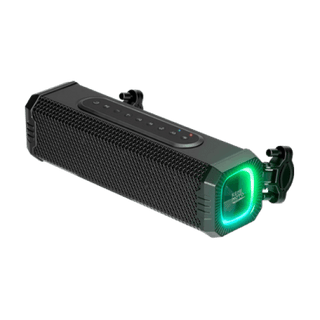
Los altavoces de rango completo (como el Kit de audio para UTV de 3 altavoces de Kemimoto, 2 altavoces de rango completo + 1 woofer) son ideales para sistemas donde el espacio, el costo o la simplicidad son importantes, como altavoces Bluetooth portátiles, unidades estéreo pequeñas o configuraciones básicas de UTV. Pueden ser una excelente opción cuando la durabilidad robusta y el sonido equilibrado son prioridades, sin la complejidad de instalar múltiples tipos de altavoces.

✔ Cuándo funciona mejor el altavoz de varias vías
Si tiene mucho espacio en su UTV u otros vehículos, y busca la mejor experiencia sonora, el altavoz de varias vías será la solución n.º 1 para el sistema de sonido de su vehículo. Este altavoz se combina con 2 o 3 (o incluso más) tipos de altavoces.
★ Altavoces de 2 vías
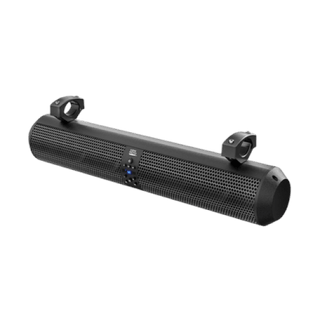
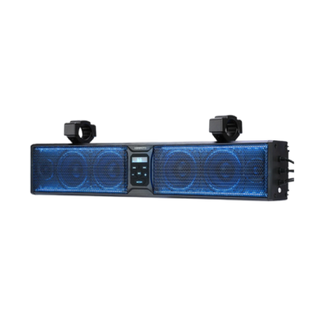
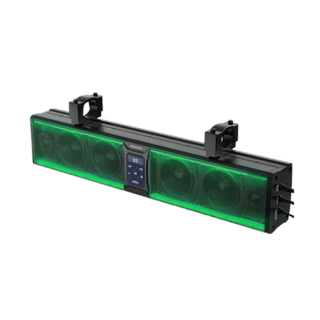
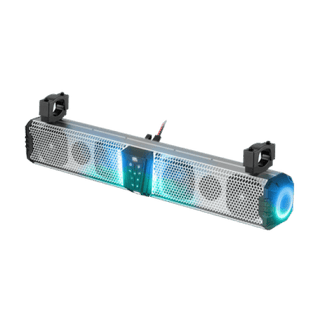
Un altavoz de 2 vías contiene dos controladores principales: woofer (frecuencias bajas + algunas medias) + tweeter (altas frecuencias). (por ejemplo, Barra de sonido Bluetooth para UTV de 6 altavoces de Kemimoto, 4 subwoofers + 2 tweeters)
El crossover incorporado divide la señal de modo que el tweeter solo reciba las altas frecuencias mientras que los componentes del woofer cubren el resto. Dicha disposición es muy común en los altavoces para consumidores generales, ya que ofrece un compromiso bastante bueno entre el tamaño, el precio y la calidad del sonido. Sin embargo, las frecuencias medias pueden ser un poco menos claras porque el woofer debe manejar un espectro más amplio.
★ Altavoces de 3 vías
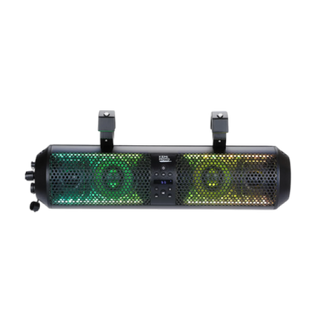
El altavoz de 3 vías normalmente se compone de: subwoofer/woofer para las bajas frecuencias, controlador de medios para las voces e instrumentales, y tweeter para las altas frecuencias. (por ejemplo, Barra de sonido de techo 34.25" Kemimoto Midnight 90, 2 woofers + 4 medios + 2 tweeters)

Esta separación permite que cada controlador se centre en una banda más estrecha de frecuencias, mejorando la claridad y el rendimiento general del sonido. Por lo general, obtendrá un sonido más preciso y una comparación de altavoces más equilibrada entre graves, medios y agudos.
Altavoces de 2 vías frente a 3 vías
|
Característica |
Altavoz de 2 vías |
Altavoz de 3 vías |
|
Número de controladores |
2 |
3 |
|
Separación de frecuencia |
Amplia |
Más estrecha + más enfocada |
|
Claridad y detalle |
Buena |
Mejor |
|
Complejidad |
Más simple |
Más compleja |
|
Costo |
A menudo más bajo |
A menudo más alto |
La principal diferencia entre los altavoces de 2 vías y los de 3 vías es cómo se dividen las frecuencias de sonido. Una configuración de 2 vías mantiene las cosas simples al dividir el sonido entre dos tipos de controladores, mientras que una de 3 vías separa los graves, medios y agudos con mayor precisión. En una comparación de altavoces, los de 2 vías suelen ser más simples y económicos, mientras que los de 3 vías pueden proporcionar detalles más claros en un rango de sonido más amplio.
Instalación de altavoces para UTV: prepare su configuración para el sendero
Una buena instalación de altavoces para UTV comienza con el montaje. Antes de montar nada, verifique el tamaño recomendado de la jaula antivuelco del altavoz y elija un lugar que mantenga los altavoces del UTV seguros sin bloquear su vista ni molestar a los pasajeros. Las barras de sonido Kemimoto utilizan diferentes rangos de montaje según el modelo, por lo que medir primero la jaula antivuelco puede ahorrarle muchos problemas después.
Una vez fijada la posición, coloque los soportes suministrados y apriete los herrajes de manera uniforme. Luego, conecte la alimentación de acuerdo con su modelo de altavoz. Algunas configuraciones de barras de sonido para UTV pueden conectarse a una toma de corriente del vehículo de 12V, mientras que otras pueden cablearse directamente a la batería con el fusible y el cableado adecuados. Mantenga los cables alejados de piezas calientes, afiladas o móviles.
Antes de salir al sendero, encienda el sistema de audio del UTV, conecte el Bluetooth si está disponible y pruebe el sonido a bajo volumen. Realice una última comprobación de los soportes y el cableado, y su configuración estará lista para rodar.
Conclusión
Entender los diferentes tipos de altavoces para UTV es la clave para ir más allá del audio "estándar" y entrar en un mundo de sonido de alta fidelidad. Ya sea que esté realizando una comparación de altavoces para su sala de estar o actualizando su equipo todoterreno, recuerde que el equilibrio lo es todo.
¿Listo para actualizar su vehículo? Explore la colección de altavoces para UTV de Kemimoto y encuentre hoy mismo el complemento perfecto para su vehículo.


Dejar un comentario